Steady as she goes: Improved maize and wheat varieties actually lower farmers’ risks

CIMMYT E-News, vol 3 no. 7, July 2006

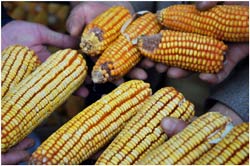
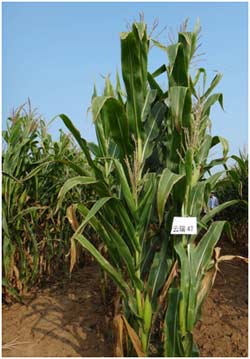
jul04A USAID-funded study by Williams College economist Douglas Gollin shows that modern maize and wheat varieties not only increase maximum yields in developing countries, but add hundreds of millions of dollars each year to farmers’ incomes by guaranteeing more reliable yields than traditional varieties.

Modern crop varieties developed through scientific crop breeding clearly produce higher yields than farmers’ traditional varieties. But critics have long maintained that, in developing countries, yields of modern varieties vary more from season to season than the traditional varieties, thereby exposing producers and consumers to greater risk.

Gollin’s study analyzed changes in national-level yield stability for wheat and maize across developing countries and related them directly to the diffusion of modern varieties. “The outcomes strongly suggest that, over the past 40 years, there has actually been a decline in the relative variability of grain yields—that is, the absolute magnitude of deviations from the yield trend—for both wheat and, to a lesser extent, for maize in developing countries,” says Gollin. “This reduction in variability is statistically associated with the spread of modern cultivars, even after controlling for expanded use of irrigation and other inputs.”

 The value to farmers of reduced risk

Valuing these reductions in yield variability requires assumptions about society’s willingness to trade off risk against return. Using a standard analytic framework, the study finds that the reductions in variability are as valuable as small increases in average yield. Assuming a moderate level of risk aversion on farmers’ part and taking estimates for the magnitude of reductions in yield variability, the results suggest that the reductions in yield variability due to modern varieties are worth about 0.3% of annual production in the case of wheat and 0.8% of production in the case of maize. These appear to be small effects, but the sheer scale of wheat and maize production in the developing world means that the benefits from improved yield stability are large in absolute terms. At appropriate world prices, the benefits are about US$143 million for wheat and about US$149 million for maize, on an annual and recurring basis.

The study drew on country-level data for the diffusion of modern wheat and maize varieties compiled by Robert Evenson of Yale University, as well as aggregate data on production and yields from FAOSTAT, the global food information database of the Food and Agriculture Organization of the United Nations. The analysis also made novel use of a mathematical tool called the Hodrick-Prescott filter to disentangle changes in long term trends from annual fluctuations. The filter is most often used in macroeconomics.

According to Gollin, the benefits are not attributable to any particular research theme or program. “They reflect longstanding efforts in breeding for disease and pest resistance, drought tolerance, and improved cropping systems, to name a few,” he says. “By reducing the fluctuations in maize and wheat grain yields, scientists have played a vital role in making modern crop technology attractive, accessible, and beneficial to farmers and consumers around the globe.”

For more information contact John Dixon (j.dixon@cgiar.org)

New Seed Initiative for Maize in Southern Africa III

Few agricultural inputs are as important as seed, for it is the nature of the seed that determines the basic potential of any cropping enterprise. Without good quality seed of adapted, improved and appropriate varieties, farmers will struggle to attain food security and profitable farming. In southern Africa, great strides have been made in the development of suitable varieties of maize for small-holder farmers. Many of these new varieties have been registered by national maize programs and seed companies, but the rate of scale-up and dissemination is insufficient to impact large numbers of house-holds. Therefore, more concerted efforts are required to progress towards the vision of the New Seed Initiative for Maize in Southern Africa (NSIMA).

The NSIMA Phase III is focused on increasing the uptake of improved maize varieties by small-holder farmers in Southern African Development Community through enhancing the effectiveness of the seed value chain.

Period: 2011 – 2013
Objectives: Develop and stimulate  production, marketing and use of improved maize varieties with increased productivity, nutritional value and acceptance under the stress-prone conditions of resource-poor farmers.
Partner countries: Angola, Botswana, D.R. Congo (Katanga Province), Lesotho, Malawi, Mozambique, Swaziland, South Africa, Zambia and Zimbabwe.

Funding institutions: Swiss Agency for Development and Cooperation (SDC)
Key Partner Institutions: CIMMYT, NARES, GART, Africa Harvest, the Private Seed Sector, NGOs, and  Community Farmer Organizations in SADC countries.
Principal coordinators: CIMMYT, Zimbabwe
Principal investigators & other associated scientists:  
Expected outputs:  
Project organization: NSIMA Regional Steering Committee for Maize working through National Coordinating Units in Participating Countries, supported by a Regional Coordination Unit based in CIMMYT-Zimbabwe.
Highlights: Highlights of phase II
Presentations:
Publications  
Proceedings:
Capacity building:
Contact details:

Moving uphill: Maize’s growing role in Ethiopia

CIMMYT E-News, vol 6 no. 1, January 2009


Fueled by high-yielding varieties and national initiatives to promote the crop in highland areas, maize’s popularity is mounting rapidly in Ethiopia. Because farmers can get more food and income with the new varieties, they are calling out for seed. Suppliers—both private and government supported—are clamoring to meet the demand

“Farmers have expressed strong feelings for maize,” says a translator. A group of villagers at Sororo, Ejere District, Oromia, stand in the intense, mid-morning glare of highland Ethiopia and speak to visitors about their experiences with the improved maize varieties they had received from Demissew Abakemal, maize breeder with the Ethiopian Institute of Agricultural Research (EIAR). “It was a very dry year, and your maize is performing well,” the farmers say. “We have a surplus for food and even some for taking to the market—something we’d not seen in all our lives.” They have been harvesting and piling sheaves of wheat from the bottom of the hill, but take the visitors to maize fields up near their dwellings, and proudly show the large ears of the hybrid Arganne and a nearly-as-productive open-pollinated variety (OPV), Hora.

Continue reading

CIMMYT brings the best in wheat

CIMMYT E-News, vol 3 no. 3, March 2006

mar_symptraver2Scientists talk wheat at the place where the green revolution began

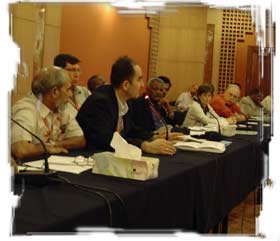
Prominent players in global wheat research—hailing from Azerbaijan to Zimbabwe and about 20 countries in between—arrived at Ciudad Obregón, Mexico in late March to chart a course for wheat research in the developing world for the coming decade.

Approximately 130 participants attended the weeklong “International Symposium on Wheat Yield Potential: Challenges to International Wheat Breeding,” sponsored by CIMMYT and the Australian Centre for International Agricultural Research (ACIAR).

“This symposium has been a tremendous opportunity for sharing ideas and learning right across the world’s wheat research fraternity,” concludes Tony Fischer, ACIAR Program Advisor for South Asia. “The representation from both the developing and the developed world is very good and we once again see that in the developing world innovation system CIMMYT continues to play a huge leadership role.”

“The original purpose,” says symposium organizer and CIMMYT wheat physiologist Matthew Reynolds, “was to disseminate new technologies that would improve the efficiency of wheat breeding in lesser developed countries. We achieved that and much more. We delivered the results of our ACIAR project on early generation selection and improved understanding of the fundamental constraints to yield potential, but then went on to a wide range of very topical subjects covered by top experts in the field.”

mar_symptraver

The meeting opened with a keynote address by Dr. Norman Borlaug entitled “Personal Reflections of 62 Years of Fighting Hunger.” Following the warmly received address, the symposium got down to business with a series of 40 technical presentations. A poster session addressing wheat breeding and production (and related constraints) in 17 countries ensured that NARS perspectives were well represented. The concluding day of the meeting was devoted to breakout and reporting sessions to define wheat research initiatives and explore the roles of CIMMYT, advanced research institutes, and NARS in putting the plans into action.

CIMMYT held a similar meeting nearly ten years ago to the day, which focused primarily on increasing yield potential, breeding for drought, and the use of molecular tools. While these items, particularly water use efficiency, remain high on CIMMYT’s agenda, the symposium participants observed that the world wheat situation and agriculture generally is rapidly changing, and consequently, new priorities have emerged. NARS representatives flagged high priority issues such as conservation agriculture, the need for higher quality wheat bred for specific food and industrial uses, and breeding with climate change in mind, notably heat stress.

Bayan Alimgazinova, Deputy Director, Science Department, Ministry of Agriculture of Kazakhstan

“CIMMYT provides and facilitates the exchange of germplasm and this is very important for our breeding efforts. The Kazakhstan-Siberia Network for Spring Wheat (KASIB) is a good example of this. It’s a new type of collaboration for us, with the shuttle breeding, traveling seminars, and other activities. We’ll be studying more than 1,000 entries in the trials and many of these will be useful for Kazakhstan. Our varieties go out as well. The impact of this is multiplied because all of the information from the trials and conferences gets published in journals (in Russian), as do a range of other publications and training course materials. CIMMYT is the main reason this is happening. A small but important component of our relationship with CIMMYT is the interaction with the outside scientific community that they provide to Kazak scientists.”

There were a number of exciting new ideas that emerged from this symposium, says Hans Braun, Director of the CIMMYT Wheat Program, “all of which depend on ever closer links between scientists in the international wheat community. In our final sessions we crystallized these into research thrusts that we would like to incorporate into our existing program.”

Braun said three major areas cited for more intensive research emerged from the interactions:

  • Integration of physiological trait-based approaches into conventional breeding schemes to advance progress on complex traits associated with yield and stress adaptation. This entails dissecting yield into its physiological components and using conceptual models to increase the likelihood of combining complementary genes to capture the desired trait. CIMMYT terms this use of physiological markers physiological breeding or “smart crossing.”
  • More systematic characterization of target environments than in the past. Combining comprehensive environment data with CIMMYT’s exceptional and extensive phenotypic data of genotypes will greatly expand our knowledge about genotype x environment interaction. This will be further catalyzed by new tools and methodologies in the areas of geographic information systems, advanced statistics, modeling, and bioinformatics.
  • Conservation agriculture (CA) was strongly endorsed as a strategy for buffering the adverse effects of environment on crop yields, especially in the face of climate change and reduced water resources. This is in addition to CA’s role in stabilizing the natural resource base and reducing long-term dependence on agro-chemical inputs.

For further information contact Matthew Reynolds (m.reynolds@cgiar.org)

New life for old varieties

CIMMYT E-News, vol 3 no. 11, November 2006

nov04A CIMMYT scientist is working to see if instead of replacing old varieties with “new and improved”, it is possible to combine the best of the new while retaining the old.

In the village of Tumbadero, Mexico, adjacent to CIMMYT’s Agua Fría maize research station, the farmers place a very high value on their traditional varieties. The maize they grow has small ears so it does not yield much. What makes each ear special is a long husk that dwarfs it. The village is close to a major transportation route and traders pay a premium for the husks, which are used to wrap one of Mexico’s most famous foods, the tamale. “We make more money selling the husks than we do selling the grain” says Ruben López, a farmer in the village. But he and the other villagers have a problem: storing the ears without their husks is an open invitation to insects to feast on the maize. With so little yield, saving every grain possible for food is extremely important.

Less than a hundred kilometers from Tumbadero is another village—Cañada Rica. It is well off the beaten track and far from traders. Farmers like Eva Cruz care much more about the cooking quality of the maize flour than they do about the husks, which they cannot sell. Eva uses husks as kindling for the fire on which she cooks tortillas each morning. “Our maize makes the best tortillas,” she says. “They are thick and filling, much better than ones you make with maize flour from the store.” But Eva Cruz’s maize is not without problems either. Storage pests attack her harvest regularly, just as they do the maize in Tumbadero.

nov05
Clearly the traditional varieties grown by the farmers of these two villages are very different and have been bred by them to meet specific needs. Each variety is also well-adapted to its local environment. Farmers have no desire to abandon those traits, but also need maize that yields, stores, and tolerates stress better than their traditional varieties. That conundrum became a challenge for Dave Bergvinson, a CIMMYT entomologist who specializes in maize pests. “What if, instead of breeding whole new varieties on a mass scale, you gave the farmers themselves a chance to breed their own?” asks Bergvinson. “You take their best and combine it with our best and then let them do the rest.” To test the idea, he is working with farmers in isolated, economically disadvantaged regions in Mexico. He takes seed from farmers to a CIMMYT research site, like the station at Agua Fría, where he can cross it with CIMMYT maize that has the characteristics missing in the farmers’ varieties. Each cross is specific to a particular village or farmer. After one season of crossing, Bergvinson selects the progeny that perform the best and most closely match farmer preferences for husk, grain type, adaptation, and other traits. Finally, he returns seed of the improved local variety to the farmers. From then on each farmer has what is basically his traditional variety, but with certain improved characteristics.

According to Bergvinson, CIMMYT lacks the resources to carry out such work on a global scale. “It’s not a mass, large-scale solution,” says Bergvinson. “But it is a way of getting to the small pockets of deep poverty and giving those farmers a chance.” It also provides another way for breeders to get a true sense of what end-users of breeding products—the farmer and consumer—consider important.

The pilot project is only in it’s fourth season and there is much analysis to be done, but farmers like Eva Cruz and Ruben López have grown their new seed and can see the improvement. They also see that the traits they value so much in their maze have not been lost.

For more information, David Bergvinson (d.bergvinson@cgiar.org)

A Maize for Farmers on the Edge

May, 2005

peru01CIMMYT-Peru maize, Marginal 28, outstrips expectations for farmers in Peru

On a hillside that abuts more than 3,000 kilometers of Amazonian expanse beginning in Peru and reaching clear across Brazil to the Atlantic, farmer Virgilio Medina Bautista weeds his maize field under the stifling equatorial sun. He and his wife Sabina Bardales typically arise before dawn to cook a meal for their field workers, and will work all day until bedtime, around 9 p.m. “We come to the field with the food for brunch and ready to work,” Medina says. “It’s a hard life, but there’s no other way, for someone without an education.”

Like 90% of the farmers in this region of Peru—the lowland zones east of the Andes known as the “jungle”—as well as many on the coastal plains or in inter-Andean valleys, Medina sows Marginal 28. This open-pollinated maize variety, developed in the 1980s by Peru and CIMMYT, is popular for its high yields and broad adaptation. It provides two or three times the average yield of the local variety it replaced, and grows well in diverse environments. “Private companies have been trying to introduce maize hybrids here, but they yield only six tons per hectare,” says Edison Hidalgo, maize researcher from the National Institute of Agricultural Research (INIA) “El Porvenir” experiment station, whose staff help spread productive farming practices throughout the region. “Marginal 28 gives that or more, under similar management, and because it’s an open-pollinated variety, farmers don’t have to purchase new seed every season.”

Luis Narro, CIMMYT maize researcher in South America and a native of Peru who helped develop Marginal 28, says the cultivar’s adaptation and uses have far outstripped expectations. “This variety is sown most widely in jungle zones—truly marginal, lowland areas characterized by poor soils, heavy weeds, and frequent drought, to name a few constraints,” Narro says. “But I was just at a station in Ayacucho, at over 2,700 meters in the Andes, and saw seed production fields of Marginal 28 where the yields were probably going to hit seven tons per hectare.” Farmers in jungle areas use it chiefly in animal feeds or for export to the coast. Coastal farmers grow Marginal 28 because the seed is relatively cheap and yields high-quality forage for their dairy cattle. In the Andes, the grain goes for food and snacks.

Its adaptability may be explained in part by its genetically diverse pedigree, which even includes as a parent an internationally recognized variety from Thailand. “This suggests part of the value of a global organization like CIMMYT, which can combine contributions from around the world to develop a useful product for small-scale farmers,” Narro says.

Can Poor Farmers Stop Chopping Down Jungles?

peru02Despite the clear benefits of Marginal 28, Peruvian farmers are still struggling as markets shift, production costs rise, and maize prices remain low. Farmer Jorge Dávila Dávila, of Fundo San Carlos, in Picota Province, in the Amazon region of Peru, grows maize, cotton, banana, and beans on his 10-hectare homestead. Because he is relatively far from the trans-Andean highways leading to the coast, where maize is in heavy demand for use in poultry feed, middlemen pay him only US $70 per ton of maize grain—well below world market prices. “Maize is a losing proposition; that’s why so many farmers here are in debt,” he says. “They can’t take their maize to local companies for a better price, because they already owe it to the middlemen who provide inputs.”

Unlike most peers, Dávila makes ends meet through hard work and what he calls “an orderly approach” to farming. Many in the region slash and burn new brushland, cropping it for two or three seasons till fertility falls off, and then they move to new land. Dávila has stayed put for eight years on the same fields. “I tell my neighbors not to cut down their jungle,” he says. “I’ve seen that leaving it brings me rain.” With support from INIA researchers like Hidalgo, Dávila is testing conservation agriculture practices. For example, on one plot he plans to keep maize residues on the soil surface and seed the next crop directly into the soil without plowing. Research by CIMMYT and others has shown that this practice can cut production costs, trap and conserve moisture, and improve soil quality.

For further information, contact Luis Narro (l.narro@cgiar.org)

The Color Orange: Key to More Nutritious Maize?

CIMMYT E-News, vol 2 no. 10, October 2005

colorOrangeThe HarvestPlus Maize group examines progress toward breeding maize with enhanced pro-vitamins A, iron, and zinc.

CIMMYT maize scientists and colleagues from national programs in the key countries targeted by HarvestPlus reported significant progress in identifying maize with elevated concentrations of iron, zinc, and pro-vitamins A (chemicals the human body can convert to vitamin A) in their elite maize varieties and germplasm collections. The results of two years of work were presented at the second HarvestPlus Maize meeting hosted by EMBRAPA, the national agricultural research program of Brazil at their maize and sorghum research station in Sete Lagoas.

Maize is a key target crop for nutritional enhancement because it is so widely consumed in areas where high malnutrition—especially vitamin-A deficiency—exists. Scientists working in the HarvestPlus program hope eventually to breed high-quality, high-yielding maize with enhanced pro-vitamins A, iron, and zinc content. These micronutrients in maize will have to be in a form that survives processing and can be utilized by the human body.

The first planning meeting for the maize scientists was held in 2003 in Ethiopia. “We’ve come a long way since we first met two years ago,” says Kevin Pixley, the HarvestPlus Maize coordinator and Director of CIMMYT’s Tropical Ecosystems Program. “But we have also realized that this is a very complex subject with many assumptions that have to be validated.”

colorOrange2
CIMMYT maize breeder Dave Beck showed the group results of screening of CIMMYT elite highland and transition zone maize germplasm for enhanced levels of pro-vitamins A, zinc, and iron. HarvestPlus nutritionists have set minimum targets for the concentrations of these micronutrients in maize. The good news is that for zinc, CIMMYT has identified material that was already above the threshold. For iron the picture is less promising as existing lines identified have only 60 percent of the required minimum level for iron. For pro-vitamins A CIMMYT has examined hundreds of lines. The best CIMMYT lines have about 75 percent of the minimum requirement, but sources identified by project partners in the USA have the minimum required level of pro-vitamins A. The CIMMYT team is now breeding to enhance pro-vitamins A concentration for highland, transition zone, mid-altitude, and lowland-adapted materials.

A topic of keen interest at the meeting was how to convince people to adopt any nutritionally enhanced maize varieties that might be developed. In much of eastern and southern Africa, white maize is preferred over yellow maize. Scientists in Zambia and Zimbabwe had conducted studies about the acceptability of yellow maize. Both studies found that yellow maize is associated with food aid and that was one reason people did not want to eat it. Scientists know there is a strong correlation between the color of the maize and the total level of carotenoids. Some of these carotenoids are precursors for vitamin A “pro-vitamins A.” Torbert Rocheford, a professor of plant genetics at the University of Illinois, suggested that the debate should not actually be about yellow maize in many parts of Africa. He said what we should be talking about is orange maize—something new that will not carry the stigma of yellow maize but will have high pro-vitamins A content.

For further information, contact Kevin Pixley (k.pixley@cgiar.org).

South Asian Partners Host Trustees for Extended Field Visits

April, 2004
South Asian Partners Host Trustees for Extended Field Visits

Much of CIMMYT’s research focuses on improving the livelihoods and food security of poor households in South Asia, which is home to more of the world’s poor–43 percent–than any other region. To observe the impact of CIMMYT’s efforts there and to assess opportunities to help farmers, CIMMYT’s Board of Trustees and senior management visited India and Nepal in March. Officials of both countries hosted the visiting delegation.

India and Nepal are two key partners for CIMMYT. India’s relationship with CIMMYT began before the Green Revolution, and the world has benefited from the research products of this collaboration. CIMMYT also has maintained a long partnership with Nepal, where the National Agricultural Research Center (NARC) has hosted CIMMYT’s South Asia Regional Office for 18 years.

Field Visits in India

visitingNepalOn the first day of the field visits, about 200 farmers from nearby villages greeted the delegation and expressed appreciation for new practices that were helping them to diversity agricultural production and conserve resources such as water and soil. The delegation was welcomed in Kapriwas, Gurgaon by senior officials of the Indian Council of Agricultural Research (ICAR), including Director General Mangala Rai, Deputy Director of Crops and Horticulture G. Kalloo, and M.K. Miglani, Vice Chancellor of Haryana Agricultural University. They explained how new tillage and planting practices helped Indian farmers by saving labor, fuel, and irrigation, while maintaining or increasing yields.

Many farmers were extremely enthusiastic about the visit. One farmer was sprinkle irrigating wheat that was close to maturity, which is something that is not typically done. When one of the visitors asked why he was doing this, the farmer replied that he was overjoyed by their visit and wanted to show off his sprinkle irrigation system. (The technical explanation was that he wanted to lower the heat stress and improve grain filling.)

The visitors saw research to identify salt-tolerant wheat and other crops and to study the long-term effects of saline water use at Bawal Research Station. They also saw an experiment showing how paired-row wheat planting on beds produced high yields, large spikes, and large grains, which help wheat fetch a higher market price. Although all the farmers who joined the delegation agreed that wheat planted on beds in paired rows gives higher yields with less labor and fewer inputs, they said there is a shortage of bed planters for Indian farmers. CIMMYT, ICAR, and the private sector are working to improve the situation.

Another experiment they observed evaluated the potential for growing maize in Haryana, where limited production and high demand compel people to buy maize in Delhi or Rajasthan.

On the second day the delegation visited Durgapura Research Station of Rajasthan Agricultural University. They learned about a wide spectrum of research, including breeding for resistance to rust and to cereal cyst nematode and for tolerance to saline conditions. They heard about issues related to the use of brackish and saline water in crop production in arid regions. Some participants expressed concern about the long-term health effects of this practice, especially in the production of green vegetables.

On the third day the delegation was received by farmers of Kallogarhi-Matiala Village, as well as PP Singh (Vice Chancellor, Sardar Vallabh Bhai Patel University of Agriculture and Technology, Meerut) and Larry Paulson (USAID-India). Board members were very interested in locally developed, low-cost equipment for promoting conservation agriculture. They saw the comparative performance of wheat planted using zero-tillage drills with “inverted T” and double disc openers. Farmers at this site are developing a permanent “double no-till” system of conservation agriculture to grow rice and wheat.

During dinner, representatives of Raja Balwant Singh College Trust thanked CIMMYT for more than 50 years of partnership in Indian agricultural development, dating back to before the Green Revolution. They suggested that CIMMYT and RBS, the largest and one of the oldest agricultural colleges in India, could benefit from a joint visiting scientist program.

Field Visits in Nepal

In 2003, Nepal’s national average wheat yield surpassed 2 t/ha for the first time, an achievement that gives some idea of the constraints that farmers there have overcome. The National Wheat Research Program Coordinator, Mr. M.R. Bhatta, described the impact of disease and yield nurseries that CIMMYT and NARC distribute throughout South Asia, and observed that more than 20 wheat varieties have been released in Nepal in the past 15 years.

At Khumaltar Research Station, NARC researchers highlighted studies in areas such as pathology, breeding, agronomy, soil sciences, mechanization, and biotechnology.

The visitors also heard researchers from the Hill Maize Research Project describe how communities have become self-sufficient in maize, their staple food, for the first time. Nearly 80% of Nepal’s maize is grown in the mid-hills, where more than 10 million people depend on the crop for food, income, and animal feed. Shortages are chronic. The Hill Maize Research Project provides the farmers with source seed, plus training in seed production techniques, storage, and marketing. It also ensures that there is sufficient seed of new maize varieties for farmers to replace old improved or local varieties, which yield very little.

Through their efforts, communities have produced more than 150 tons of maize seed. Community-based seed production accelerates seed replacement, disseminates new technologies, improves household food security, and raises incomes. This work, supported by the Swiss Agency for Development and Cooperation (SDC), is having an enormous impact in isolated hill sites.

A visit to farmers’ fields in Thecho Village in the Kathmandu Valley showed how farmers’ access to better wheat varieties and growing practices was increasing through participatory research. The farmers partner with NARC, CIMMYT, the University of Bangore, the Agricultural Development Organization (ADO), and others in a project funded by the UK Department for International Development. Farmers enthusiastically shared their experiences with participatory variety selection and seed production. Some groups are earning enough additional income from growing wheat to purchase new equipment or make other investments.

NARC and ADO have extended participatory variety selection to rice, legumes, vegetables, and other crops throughout Nepal after seeing the success with wheat. (In India, similar exciting work is being done in collaboration with Banaras Hindu University.)

Thanks to Our Hosts

board_memberCIMMYT’s Board and staff are grateful to P.P. Manandhar, Nepal’s Secretary of Agriculture, and officials at the Ministry of Agriculture and Cooperatives for their constant support for CIMMYT’s South Asia Regional Office, and to NARC Executive Director R.P. Sapkota and his colleagues for support and field visits. They are also most grateful to ICAR Director General Mangla Rai, Deputy Director of Crops and Horticulture G. Kalloo, and the many representatives of experiment stations, colleges, and universities in India who made the visit a success. The opportunity to meet and visit the field with representatives of DFID, FAO, the Japan International Cooperation Agency, SDC, USAID, and the World Bank, among others, was also greatly appreciated.

We also thank the farmers who so kindly shared their experiences and hospitality with us.

Weighing Pros and Cons of Genetically Modified Crops in Africa

September, 2004

Should Africa embrace genetically modified crops to help feed its hungry people? That question is explored by a recent paper entitled “Debunking the Myths of GM Crops for Africa: The Case of Bt Maize in Kenya.” The paper compares the benefits of genetically modified crops to information available on the risks, and finds that most objections are not backed by evidence. Hugo De Groote, Stephen Mugo, and David Bergvinson from CIMMYT, along with Ben Odhiambo of the Kenya Agricultural Research Institute, conducted the study, which argues for a discussion based on scientific evidence and evaluation of potential benefits against concerns.

Genetically modified crops have been successful in many countries, including Canada and the US, where they have increased yields, lowered labor and cultivation costs, and reduced the use of chemical inputs. Genetic engineering has the potential to enhance food security and nutritional quality in ways not possible with conventional technology. Because the technology is contained in the seed, it is easy to distribute to farmers. This is particularly important in Africa, where extension services have largely collapsed and transport infrastructure is poor.

Concerns about deploying genetically modified crops in Africa include food safety, ethics, environmental risk, loss of landrace biodiversity, and the lack of appropriate biosafety regulations. Although long-term effects need to be analyzed, current studies by national and international organizations reveal no demonstrated toxic or nutritionally harmful effects of foods derived from genetically modified crops.

Sounding Out Public Opinion

The study by de Groote and his colleagues focused on Kenya, where maize, the main food crop, is planted on 30% of arable lands. It drew on a variety of data sources, including participatory rural appraisals and farmer and consumer surveys. De Groote thinks it is important to make research results understandable to the general public so everyone can participate in the debate.

To gauge awareness and attitudes about genetically modified crops, the researchers interviewed 604 consumers, only half of whom were aware of them. Many appreciated the benefits but worried about potential negative effects on health and the environment, especially on local plant varieties. De Groote says consumers are increasingly aware of genetically modified food and generally accept it, but their concerns about environmental safety and biodiversity have to be addressed.

Several seed companies in Kenya have expressed interest in producing and distributing Bt maize seed, which offers an effective and practical method for reducing stem borer damage in maize. Genetically engineered Bt maize contains a gene from the soil-dwelling bacteria Bacillus thuringiensis, which produces a toxin that helps control certain pests but is not harmful to humans or livestock. The Bt gene was first introduced into the commercial maize market in 1996. It has provided control for many pests and could help decrease pesticide use.

“The major surprise was that, contrary to the usual claims, Bt maize is very likely to benefit poor farmers and small seed companies,” says de Groote. “Stem borers are a real concern for farmers, especially in low-potential coastal and dry areas.”

Farmers in Kenya lose 400,000 tons, or about 14%, of their maize to stem borers. That is roughly the amount the country imports each year. De Groote says Bt maize alone will not solve this problem, but could help reduce losses and increase food security.

The IRMA Project

In 1999, the Insect Resistant Maize for Africa (IRMA) project was launched in Kenya to develop borer resistant varieties using both conventional breeding and biotechnology. Kenya already had experience with genetically modified crops and had biosafety policies in place. IRMA, a collaborative project between CIMMYT and the Kenya Agricultural Research Institute, receives financial support from the Syngenta Foundation for Sustainable Agriculture.

Before initiating the project, all parties involved agreed that transformed plants would carry only the gene of interest, without marker genes; that transgenic crops would only be developed for countries with appropriate biosafety regulations; and that only genes in the public domain would be used. They also agreed that the project would work under the highest scientific standards. When the project ends, other countries in Africa will be able to evaluate results from Kenya’s experience and decide for themselves which path to follow.

“I hope that the results will be accepted not only by the scientific community but also by the general population, in Africa as well as in the developed world,” says de Groote. “I also hope they will put to rest some of the major concerns about Bt maize for Africa.”

To make informed choices possible, the researchers contend that scientists in Africa need hands-on experience with the new technology. They need to test and adapt it using the appropriate regulatory framework and precautions. Further, the researchers believe that the technologies need to be developed in a participatory approach, since African farmers and consumers have the right to choose technologies based on the best knowledge available. They should not be denied the chance to improve their livelihoods as a result of an academic debate in which they are not included.

For more information: Hugo De Groote or Stephen Mugo

Ethiopia study on biofortified maize reveals tasty results

Quality protein maize can reduce or prevent stunted growth in young children, according to a recently published study.

nov02In eastern and southern Africa, maize is the least expensive and most prevalent cereal crop, but quantity cannot make up for quality. A maize-dominated diet helps keep bellies full, but does not provide a balanced diet. Specifically, maize lacks the essential amino acids lysine and tryptophan necessary for efficient protein synthesis. Quality protein maize (QPM)—a type of maize with increased levels of those two crucial amino acids—is the focus of a recent CIMMYT co-authored publication based on two studies conducted in separate locations in Ethiopia1.  The article delves into the role QPM can play in improving the nutritional status of young children in Ethiopia, where nearly 40% of children under five-years-old are underweight.

The first of the two studies ran from August 2002-03, in Wama Bonaya District, and showed that children who consumed QPM had a 15% increase in the rate of growth in weight over those who consumed conventional maize. The second study took place from October 2005-06 in the neighboring Sibu Sire District. Here, children fed a QPM diet had a growth rate in height 15% greater than that of children who ate conventional maize.

Both study sites were selected to represent high maize-producing and -consuming areas with high levels of child malnutrition. Sites were also selected based on environmental factors, such as rainfall and altitude, and for ease of operation for conducting the study. For almost all (97%) of the 341 participating households, farming was their sole occupation. Average farm size was 1.2 hectares. In both districts, maize was the dominant food for children—in Wama Bonaya  only 31% of families reported feeding their children foods other than maize, and in Sibu Sire 70% of the children regularly ate maize at least once a day. This highlights the vital role more nutritious maize could play in the future health and development of Ethiopian children.

Though there have been other studies on the effects and effectiveness of QPM (see Kernels with a kick: Quality protein maize improves child nutrition) this cumulative study varies slightly because it measures the effects of QPM when fully incorporated into the agricultural practices and home life of targeted households: study participants were given seed which they themselves grew and then prepared and consumed according to normal and locally-preferred practices, rather than being given pre-prepared QPM-based food products. This more closely mimics the impact QPM could have in a “real life” situation compared to some other previous study methods.

The study shows that although maize alone is not enough to sustain a nutrient-balanced diet, QPM can substantially improve the nutrition of children whose diets are, out of necessity, heavily based on one crop.

The paper was the result of collaboration among researchers Girma Akalu and Samson Taffesse of the Ethiopian Health and Nutrition Research Institute (EHNRI), Nilupa Gunaratna of the International Nutrition Foundation, and Hugo De Groote from CIMMYT-Kenya.

For more information: Hugo De Groote, agricultural economist (h.degroote@cgiar.org)

_________________________

Girma Akalu, Samson Taffesse, Nilupa S. Gunaratna, and Hugo De Groote. 2010. The effectiveness of quality protein maize in improving the nutritional status of young children in the Ethiopian highlands. Food and Nutrition Bulletin, 31(3): 418-430.

Resource conservation technologies for maize and wheat cropping systems

In partnership with national agricultural research systems, non-government organizations, agri-business, and international centers, CIMMYT undertakes research on conservation agriculture and resource conserving technologies for wheat and maize cropping systems.

Agronomy work at CIMMYT will focus strongly on conservation agriculture principles and approaches, which improve rural incomes and livelihoods through sustainable management of agro-ecosystem productivity and diversity, while minimizing unfavorable environmental impacts.

CIMMYT will examine the potential of plant pests and diseases in such systems and look at germplasm enhancements that reduce vulnerability. Beyond a focus on higher grain production and adapted germplasm, this research will seek more efficient and sustainable use of water and other inputs, lower production costs, better management of biotic stresses, and enhanced cropping system diversity and resilience.

When papa said no

CIMMYT E-News, vol 3 no. 7, July 2006

jul06A daring move by a young farmer in India has changed his life and his father’s.

Durgesh Kumar Singh shoulders a huge responsibility. When his father became too ill to work his small farm near Varanasi in the eastern Indo-Gangetic Plains, the 24- year-old student had little choice but to take on managing both the farm and his studies. His father was always there to give advice and share his farming knowledge, so when Durgesh decided to defy his father’s instructions, he was taking a big risk.

A team from the CIMMYT-convened Rice Wheat Consortium (RWC) for the Indo-Gangetic Plains had visited the villagers to enlist their cooperation in a demonstration of zero-till seeding technology. The team wanted village farmers to plant some of their wheat crop without plowing the soil first. Like people living on much of the vast plain below the foothills of the Himalayan Mountains, the farmers of Durgesh’s village plant wheat in the dry season, after harvesting the rainy-season rice crop. Preparing the land takes time and labor and for every day of delay after the optimal planting time, farmers lose about 1% of their potential harvest. A ten-day advance in wheat seeding results in 10% higher harvests. Plowing means waiting until a crew with a tractor and plow is available.

jul05

When the RWC team, which included Ramesh Chand and UP Singh from Banaras Hindu University, first visited the village, people laughed. “How can you expect the seed to germinate if you just throw it on the ground?” they joked. After two weeks of cajoling and pointing out that zero-tillage saves time, labor, and scarce water, the team convinced one farmer, Surindra Sharma Mayaran, to set aside a very small piece of his land for a trial. “If it works, OK, and if it doesn’t, OK,” he said. Even though the wheat germinated and grew, most villagers remained skeptical, especially Durgesh Singh’s father. He told Durgesh that he would die if his son tried to plant that way.

But seeing in that first trial a possibility for a brighter future, Durgesh decided to try zero-tillage for wheat on a small field that his father could not see from the house. He harvested at least as much as with the old methods, but gained something more precious. “We now have enough time to read,” he says. “My golden time is what I am saving.” This has not only let him continue his studies, but has reduced farm labor costs, making the family wheat crop more profitable. Now most of the villagers who were at first so skeptical are following his lead.

Even those who are nearly landless see benefits. Ram Dhari is what the village calls a “minimum landholder” with just a tenth of a hectare. He is extremely poor. He did not have the money to rent the zero-till seeding machinery, so the rest of the village let him use it for free and Banaras Hindu University provided seed. He had watched the others and wanted to follow. “I am looking forward to the profits,” he says.

This is one of countless stories of the success of a broad range of resource-conserving technologies on smallholder farms in India. RWC work, in India funded in large measure by the United States Agency for International Development (USAID), has won praise and awards. Recently the Minister of Agriculture for India, Sharad Pawar, said the use of such technologies, especially zero-tillage, was essential to the improvement of Indian agriculture.

Durgesh Singh, Ram Dhari and Surindra Mayaran see the impact in their village every day. At first Durgesh was a laughing stock. Now his zero-till fields have produced, and produced well. The father who said he would die if is son tried out such a foolish thing as planting without plowing now asks “Why didn’t you do the whole farm this way?”

For more information contact Raj Gupta (r.gupta@cgiar.org)

No maize, no life!

CIMMYT E-News, vol 6 no. 4, June 2009

In Morogoro, a drought-prone area in Tanzania, farmers are using certified maize seed and urging other farmers to grow a new drought tolerant variety, TAN 250, which they say is like “an insurance against hunger and total crop failure, even under hot, dry conditions like those of recent years.”

Continue reading

Wheat farmers see infrared

CIMMYT E-News, vol 4 no. 7, July 2007

jul03Infrared sensors help better target fertilizer for wheat on large commercial farms in northern Mexico, cutting production costs and reducing nitrogen run-off into coastal seas.

Farmers of the Yaqui Valley, Sonora State, northern Mexico, and fish in the Sea of Cortez: what ties could they possibly share? Well, if CIMMYT wheat agronomist Iván Ortíz-Monasterio and fellow researchers at Stanford University and Oklahoma State University achieve their aims, both farmers and fish may breathe a little easier.

OrtĂ­z-Monasterio and his partners have been testing and promoting with Yaqui Valley farmers a sensor that measures light reflected from wheat leaves and thereby gauges the health and likely yield of the plants. The device is calibrated to capture red wavelengths, which indicate chlorophyll content, and infrared wavelengths, a measure of biomass. The readings are run through a mathematical model to provide a recommendation about whether or not the crop requires a mid-season application of fertilizer.

Yaqui Valley wheat farmers work large holdings (averaging around 100 hectares), use irrigation and mechanization, and grow improved varieties with fertilizer, fungicides, and other inputs. They typically get excellent yields—on the order of 6 tons per hectare. Despite this, they are feeling squeezed by the rising costs of diesel fuel, water, fertilizer, and other inputs, and many are actually in debt; so they are fervently seeking ways to save money.

Too much of a good thing?

“Farmers here typically apply 230 kilograms of nitrogen per hectare, and 150 kilograms of this goes on 20 days before sowing,” explains Arturo Muñoz Cañez, a consulting agronomist who works a lot of the time with the Asociación de Organismos de Agricultores del Sur de Sonora, an umbrella group that includes seven farmer credit unions serving producers on some 140,000 hectares in the region. “Our studies with Iván have shown that local wheat crops actually use only about one-third of that fertilizer.”

Where does the rest go? Some evaporates into the atmosphere, in the form of nitrous oxide, a notorious greenhouse gas that is nearly 300 times more damaging than carbon dioxide. Another part leaches as nitrate into groundwater, and much of the rest dissolves in run-off irrigation and rainwater, eventually finding its way to the west coast of Sonora and into the sea. There it may fertilize oxygen-hungry algae that can suffocate other marine life and cut into fishermen’s catches.

From Mexico to the world

jul04
With the help of Ortíz-Monasterio, Muñoz, and other agronomists, Yaqui Valley farmers used the sensor on 174 plots in 2006-07, comparing readings from a fully-fertilized comparison strip with those from the rest of the field at 45 days after sowing—a point at which most important differences in crop development are evident. They then followed the resulting recommendations concerning how much additional fertilizer was needed, if any. In 66% of the cases, the recommendation was to apply nothing more. At harvest, yields from both the fully-fertilized strips and 86 test plots were compared by weighing the grain. “92% of the farmers got good yields—that is, comparable to those of fully-fertilized strips—and on average saved around US$ 75 per hectare in fertilizer they did not apply,” says Muñoz. That’s a US$ 7,500 savings for a 100-hectare farm.

Ortíz-Monasterio attributes the success partly to residual fertility in the local soils, but would like to see eventual adoption of more precise, resource-conserving agricultural practices—including direct seeding without tillage, retaining crop residues on the soil surface, and improved water use efficiency—on at least half of the total 200,000 hectares of the Yaqui and nearby Mayo Valleys. “The Yaqui Valley has been a sort of laboratory for the rest of the world,” says Ortíz-Monasterio, who has worked for several years with researchers in Pakistan to adapt the sensor for the country’s extensive irrigated wheat lands. “A lot of what was first developed here—high-yielding wheat varieties, sowing on raised beds, and now the sensor—has gone on to be used in other wheat farming regions of the developing world. In some ways, what happens here is a reflection of how successful or not CIMMYT is.”

Ortíz-Monasterio is also promoting a lower-cost alternative for farmers who may not be able to work with a sensor: “You simply establish a well-fertilized strip in your field. If the rest of your crop looks comparable in health and development to plants in the strip, then you don’t need to apply more fertilizer. If there is any difference, then you apply what you would normally apply. In this way, we’d help at least half the irrigated wheat farmers in the world.”

For more information: Iván Ortíz-Monasterio, wheat agronomist (i.ortiz-monasterio@cgiar.org)

Molecular detection tools for African maize breeders

CIMMYT E-News, vol 3 no. 1, January 2006

MolecDetectionA new DNA detection service provided by CIMMYT and KARI responds to African researchers’ calls for modern technology.

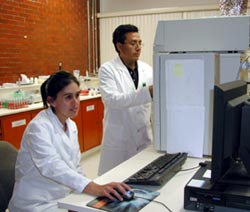
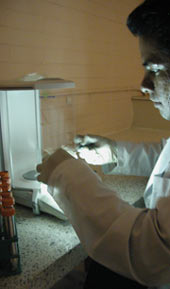
African maize breeders now have access to state-of-the-art biotechnology tools thanks to a service launched by CIMMYT and the Kenya Agricultural Research Institute (KARI). Housed within the laboratories at the International Livestock Research Institute (ILRI) headquarters in Nairobi, under the Canadian International Development Agency (CIDA)-funded Biosciences Eastern and Central Africa (BECA) platform, the lab offers and trains researchers in the use of molecular marker techniques.

The molecular markers are DNA snippets that help researchers locate and select for genes associated with traits of interest, including resistance to pests and diseases, or tolerance to stresses like drought. With markers, breeders can cut the time and money needed to develop plant types that possess such useful traits. Until now, this capability had been unavailable to scientists in sub-Saharan Africa, outside of South Africa.

Led by CIMMYT biotechnologist Jedidah Danson and supported by the Rockefeller Foundation, the service now has its hands full of requests from breeders working with CIMMYT, national agricultural research systems, local seed companies, and universities. “They’ve learnt of the service entirely through word-of-mouth,” she says. “It’s especially attractive because current funding allows us to offer the service free, so more breeders are exposed to the technology.”

Breeders using the service are especially interested in finding ways to incorporate resistance to maize streak virus, a disease endemic in much of sub-Saharan Africa and in enhancing the nutritional quality of herbicide tolerant maize, originally developed as part of a package to control the parasitic witch weed.

“Marker assisted selection is an important tool for breeders in Africa. CIMMYT and KARI must be lauded for being the first in the region to provide the service to public sector researchers,” says Richard Edema, molecular breeder at Makerere University, Uganda. Edema is also coordinator of the African Molecular Marker Application Network, a consortium of about 100 biotechnologists and breeders from across sub-Saharan Africa.

Danson is building a database of markers for genes for resistance to important pests and diseases, including maize streak virus, gray leaf spot, the parasitic weed Striga, and northern corn leaf blight. She also helps train breeders in the effective use of markers. “Clearly, our partnership to support African breeders was long overdue,” she says.

For more information contact Jedidah Danson (j.danson@cgiar.org)