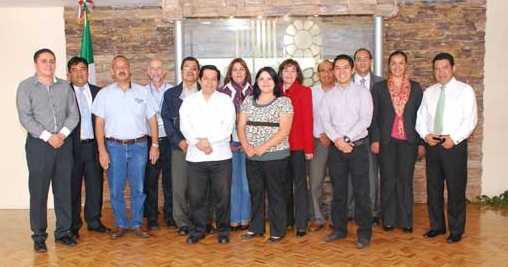
Training to beat Karnal bunt in Afghanistan
Karnal bunt is a wheat disease that can make grain too unpalatable for use in flour. It is quarantined by many countries, and can therefore seriously constrain global wheat seed exchange—and even movement of wheat within countries. During 17-18 September 2011 a training course for seed professionals on the management of Karnal bunt was held in Afghanistan at the National Seed Secretariat facility, Badam Bagh, Kabul, with the aim of ensuring that no infected seed lots pass through the certification process so avoiding the spread of the disease within the country. It was jointly organized between CIMMYT, the International Center for Agricultural Research in the Dry Areas (ICARDA), Afghanistan’s Plant Protection and Quarantine Department (PPQD) of the Ministry of Agriculture, Irrigation and Livestock (MAIL), and the Food and Agriculture Organization of the United Nations (FAO).
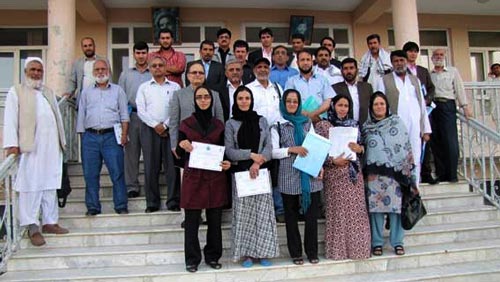
Thirty-three participants attended from the Agricultural Research Institute of Afghanistan (ARIA), PPQD, FAO, and other organizations involved in seed production and certification. Their enthusiasm was reflected in their many questions as they learned about the disease’s history, epidemiology, visual identification, laboratory identification, and management through lectures and practical sessions. Mir Amanulldin Haidari, PPQD Director, who opened the event, said that he found it very useful for his department’s work. The training sessions were led by Ramesh Chand, Professor of Plant Pathology at Banaras Hindu University, India. Arun Joshi, CIMMYT wheat breeder, Rajiv Sharma, CIMMYT liaison officer for Afghanistan, and Javed Rizvi, Afghanistan country manager for ICARDA, also took part.
Karnal bunt has long been present in Afghanistan, with favorable climatic conditions promoting occasional outbreaks, and a recent survey by ARIA indicated that several popular wheat varieties are susceptible to the disease. It is particularly prevalent in the eastern region bordering Pakistan, which has emerged in recent years as an important seed-producing area within Afghanistan. This has raised the concern that a disease outbreak in this region could easily spread to other parts of the country. Thanks to this collaborative training event, the national seed system is now ready to tackle the issue of Karnal bunt and ensure a healthy future for Afghanistan’s wheat seed.
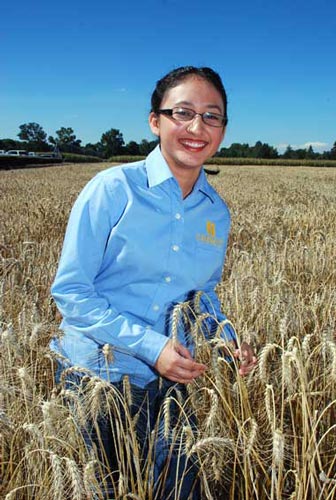 Marita Cárdenas, a member of the conservation agriculture team at CENEB, Ciudad Obregón, has been selected as one of 20 Latin American students to receive the International Plant Nutrition Institute (IPNI) Scholar Award for 2011. The prize recognizes Cárdenas’ work as part of her Master’s thesis under Iván Ortiz-Monasterio, focusing on phosphorus use efficiency using NDVI technologies (Greenseeker) to determine appropriate amounts of phosphorus fertilizer for wheat, and on wheat genotyping through phosphorus efficiency. Congratulations Marita!
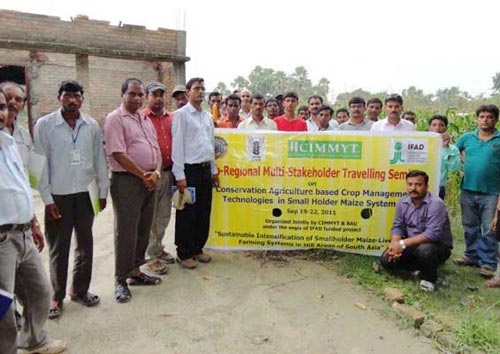 During 19-22 September 2011, Birsa Agricultural University (BAU), Jharkhand, India, hosted the Sub-Regional Multi-Stakeholder Travelling Seminar entitled “Conservation Agriculture Based Crop Management Technologies in Smallholder Maize Systems.” Organized jointly by BAU and CIMMYT-India, under the aegis of the IFAD “Sustainable Intensification of Smallholder Maize-Livestock Farming Systems in Hill Areas of South Asia” project, the seminar was attended by 37 scientists, extension agents and NGO representatives, students from Krishi Vigyan Kendra’s (KVKs) and BAU, and farmers from the three districts of Jharkhand.
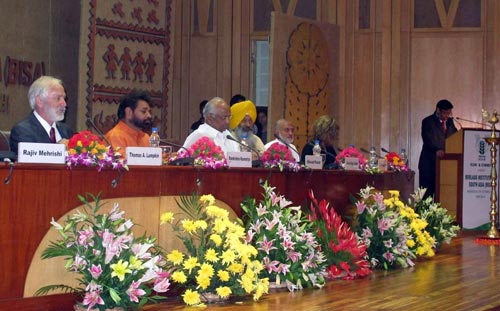 The Borlaug Institute for South Asia (BISA) was officially launched on Wednesday, 5 October 2011, at the A.P. Shinde Symposium Hall, NASC Complex in New Delhi, India.
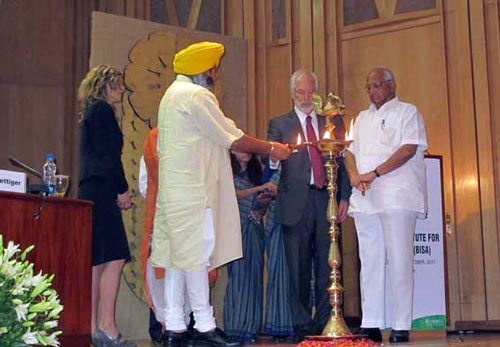 The official opening ceremony was marked by a cultural event featuring classical Indian dancing including choreographical styles from all three states. In addition to CIMMYT-India staff and speakers, also present at the launching ceremony were the management committee of CIMMYT and its Board of Trustees. The launching ceremony was attended by representatives from CIMMYT’s sister institutions ILRI, IRRI, ICARDA, and Bioversity, as well as by the Allan Mustard Institute of the US Dept. of Agriculture and the private sector. The event was closed by a dinner and a speech by the Board of Trustees Chair, Sara Boettiger.
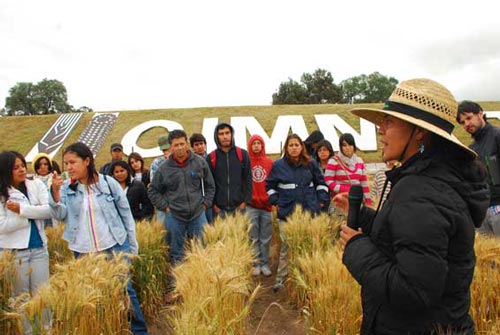 Carlos Alonso Hernández Castro, an agronomy student at the Autonomous Metropolitan University of Xochimilco, described the visit as “enriching”. “I’ve learned how people work in teams which combine field and laboratory work,” he said. Some students were affected on a more personal level, such as Cristina Ortega González, a biotechnology student at Xicotepec Technological University of Juárez, Puebla. Before the visit, she says she knew nothing of CIMMYT’s work, but the event has inspired her in her studies and she now hopes to conduct an internship with CIMMYT. Coming from a farming family, and seeing the work done at CIMMYT, González said she’s “now more convinced that I’m on the right way to contribute my bit of effort to help my family and others, if possible, to improve their lives.”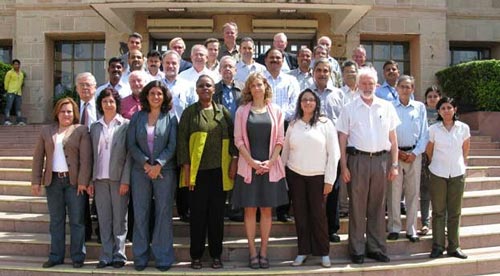
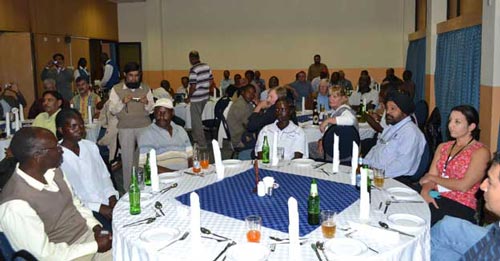 Colleagues from CIMMYT, the International Centre for Agricultural Research in the Dry Areas (ICARDA), and national agricultural research systems gathered in Njoro, Kenya, on 05 October 2011, to celebrate the approval of BISA (Borlaug Institute for South Asia) by the Indian Government. The event was organized by Sridhar Bhavani, CIMMYT-Kenya. Ravi Singh, CIMMYT-Mexico, gave the opening address to more than 40 international scientists and thanked the Government of India for funding the institute. He described the significance of the new centre in relation to the growing challenges of food security, and expressed confidence that this centre will address the expectations of a second Green Revolution in South Asia and worldwide.
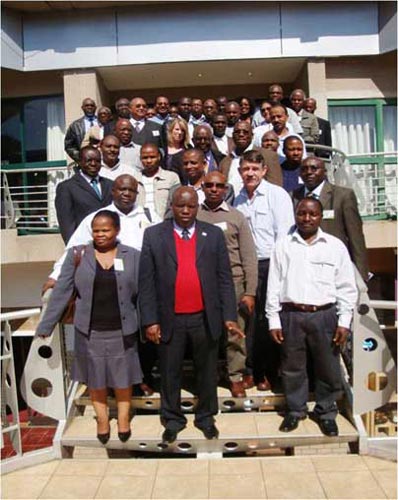 Edison Wotho, Deputy Permanent Secretary, Ministry of Agriculture, Botswana, praised Botswana’s participation in NSIMA, whose products for that country’s farmers include a new drought tolerant maize hybrid (CZH0623) and three OPVs (ZM309, ZM401 and ZM523). “The projects come at the right time,” said Wotho. “The region is experiencing frequent droughts and food shortages.”
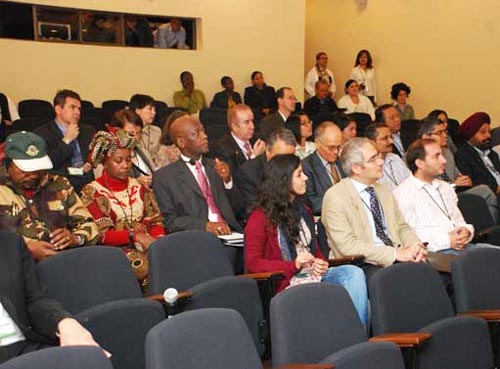 With diplomatic representatives from 15 countries in attendance, the event was designed to raise awareness and foster discussion on partnerships to secure global food security through agricultural research, an issue at the forefront of recent G20 talks in France. Musalem highlighted the Sustainable Modernization of Traditional Agriculture (MasAgro) initiative—implemented by SAGARPA and CIMMYT with myriad national, regional, and local organizations, both public and private—as an innovative model.
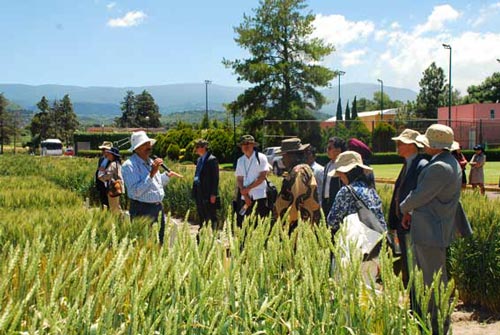 As part of the event, the visitors toured the Wellhausen-Anderson Plant Genetic Resources Center with Thomas Payne and enjoyed a presentation on wheat’s wild relatives by David Bonnet. At the long-term conservation agriculture trial plot, Bram Govaerts described current efforts to test and promote CA practices among thousands of Mexican farmers. The group saw new maize and wheat varieties and learned in more detail about the work CIMMYT and its partners are doing on these crops, in field presentations by Félix San Vicente, Natalia Palacios, José Luis Torres, Marc Rojas, and Ravi Singh.