Affordable, Accessible, Asian (AAA) Drought Tolerant Maize Annual Meeting 2013
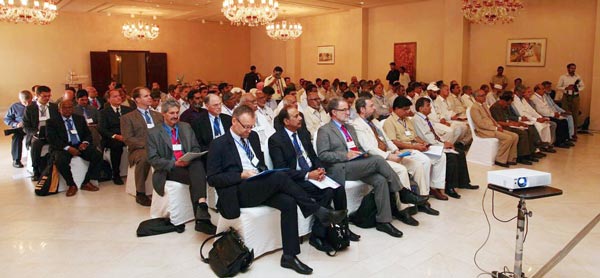
 “This project is a rare example of a public-private partnership capable of delivering products to farmers,” said Mike Robinson of the Syngenta Foundation for Sustainable Agriculture (SFSA) at the Affordable, Accessible, Asian (AAA) Drought Tolerant Maize Annual Meeting organized by CIMMYT-Asia at the International Crops Research Institute for the Semi-Arid Tropics (ICRISAT) campus during 20-21 May 2013.
Twenty-seven participants from CIMMYT, Syngenta, and national partners from Indonesia and Vietnam were welcomed by B.M. Prasanna, CIMMYT Global Maize Program director, who elaborated CIMMYT-Asia senior maize breeder B.S. Vivek presented a graphical overview of the project covering its objectives and discussing the progress achieved in 2012. Syngenta’s Naveen Sharma, Srinivasu Bolisetty, and Pathayya Ravindra then reported on the progress made in product development and product testing under managed and targeted stress environments. Future breeding plans were also discussed. Ian Barker, SFSA, discussed plans for delivering AAA products to farmers, Prasanna explained issues related to germplasm export and remedial strategies, and Manuel Logrono of Syngenta elaborated on the plans for testing and seed production. At the end of the first day, Vivek provided an overview of the association mapping project, and CIMMYT-Asia senior maize physiologist P.H. Zaidi gave a talk on the progress in root phenotyping.
The second day began with a visit to the rhizotronics facility at ICRISAT, followed by detailed presentations on genotyping and genome-wide association study (GWAS) analysis by CIMMYT Asia maize molecular breeder Raman Babu, and the progress on Syngenta’s side by Aparna Padalkar. Vivek then took over the stage again to compare the gains made by markers viza- viz conventional approach when talking about CIMMYT’s progress with Marker Assisted Recurrent Selection (MARS) and Genome Wide Selection (GWS). Hu Hung from the Vietnamese National Maize Research Institute and Muhammad Azrai from the Indonesian Cereals Research Institute then reported on the progress made in Vietnam and Indonesia, respectively.
After comparing CIMMYT’s and Syngenta’s approaches to drought phenotyping and the merits and demerits of biparental versus multiparental approaches to GWS, CIMMYT-Asia maize breeder Kartik Krothapalli concluded the meeting with a summary of the action plans discussed during the meeting.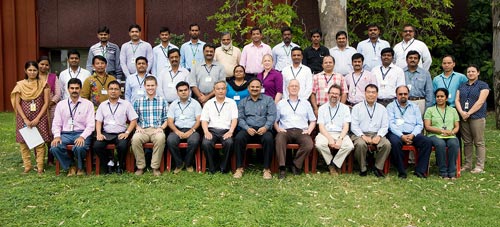
 Spot blotch is one of the major diseases in the wheat growing regions of Nepal and the knowledge allowing researchers to identify and understand the disease is thus crucial. A group of 12 wheat technical research staff from Nepal visited Banaras Hindu University (
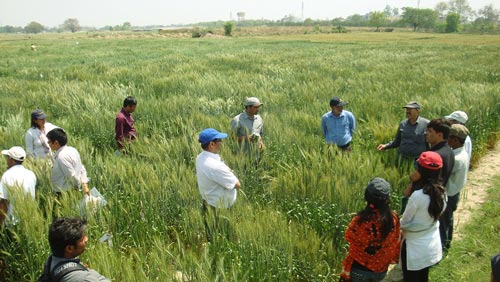 On the second day, participants visited the polyhouse and research station to learn about screening wheat genotypes
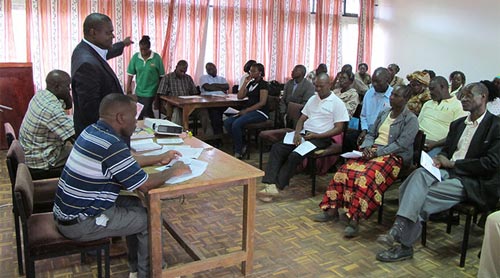 On 02 May 2013, the Water Efficient Maize for Africa (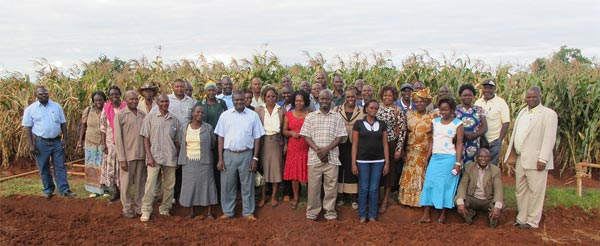
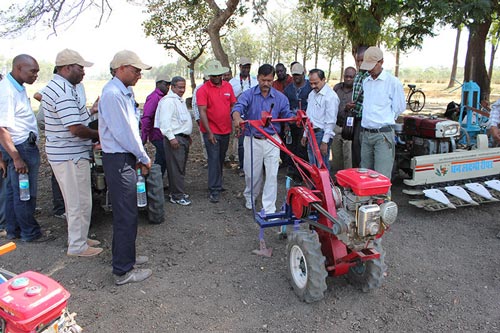 From 29 April to 10 May, 16 agricultural engineers, agronomists, machinery importers, and machinery manufacturers from Ethiopia, Kenya, Tanzania, and Zimbabwe took part in a study tour in India organized by CIMMYT, the Indian Council of Agricultural Research (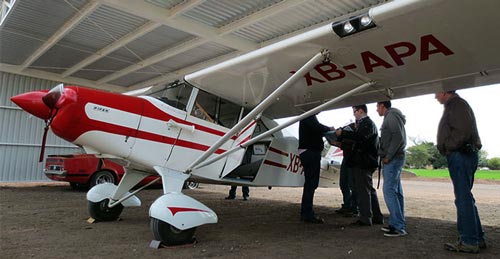
 Breeding of durable resistance to stripe rust —the greatest biotic threat to wheat production in the largest wheat producer and consumer in the world, China— was the major theme of a workshop jointly organized by the CIMMYT-Sichuan office and the Sichuan Academy of Agricultural Sciences (SAAS) at the SAAS Plant Breeding Institute in Chengdu, Sichuan province, China, on 18 May 2013. The workshop aimed to promote the adoption of second-generation parents and slow-rusting breeding strategies in spring wheat-producing areas of China and to facilitate collaborative breeding strategies between SAAS and its sister organizations in neighboring provinces. The workshop consisted of a seminar and a discussion session on germplasm and breeding strategies led by Gary Rosewarne (CIMMYT Global Wheat Program senior scientist) and Bob McIntosh (Emeritus Professor at the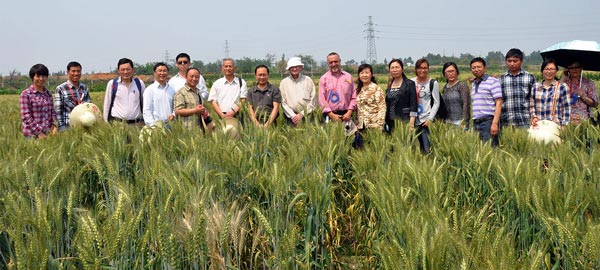
 The Nutritious Maize for Ethiopia (NuME) aims to develop and promote quality protein maize (QPM) in the major maize growing areas of Ethiopia, including the highlands and the dry lands, to improve nutritional status of children. The project has a strong gender component, ensuring women’s full participation in all activities and equal share of benefits, which was discussed during a Gender Analysis and Strategy workshop at the
 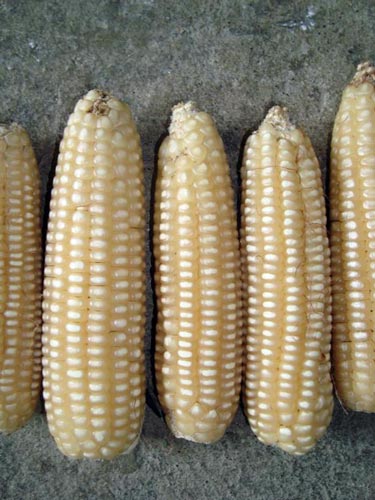 On 26-27 April 2013, the
 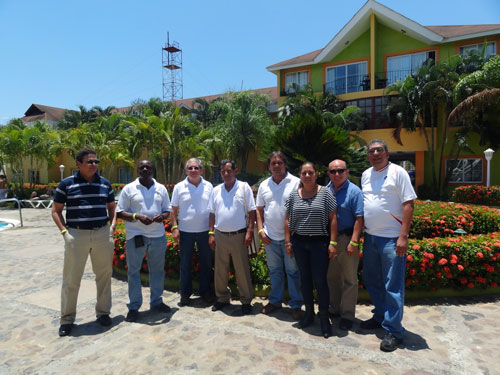 The project has generally been considered very successful. “We now know which mycotoxins are important in the region and we have the products to potentially minimize the risk,” commented Mahuku. “What we need is to widely test and disseminate the products so that they reach as many farmers as possible. With a little infusion of resources, the dedication demonstrated by this group, and support from policy makers, I have no doubt that we will get there.”
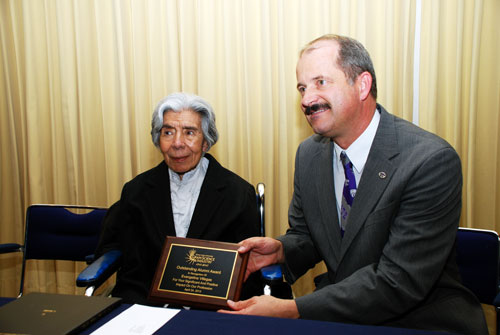 “I am so excited to be here,” said Dr. Evangelina Villegas as she received her Outstanding Alumni Award from the Department of Grain Science and Industry at the Kansas State University (
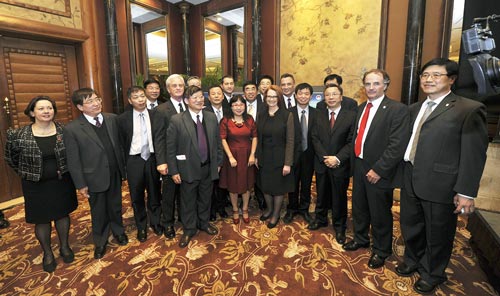 The Chinese Academy of Agricultural Sciences (CAAS)