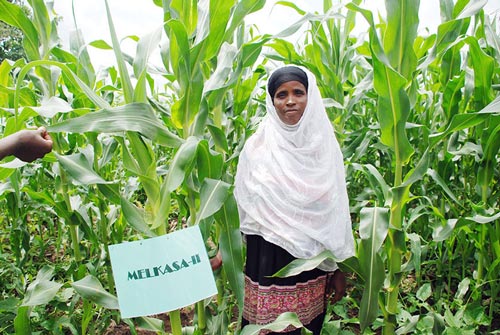
Focus on heat stress resilient maize for Asia
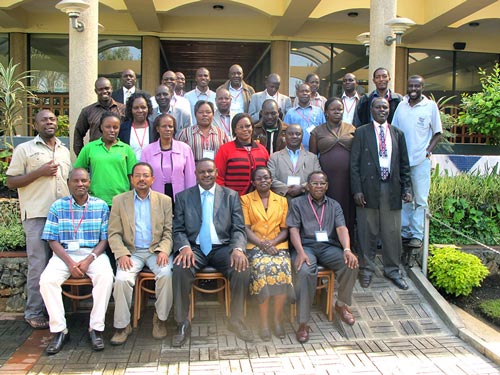
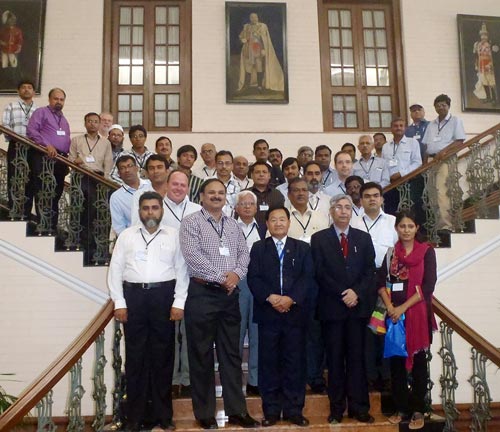 Scientists from the Heat Stress Tolerant Maize for Asia (HTMA) project and representatives from collaborating public and private sector institutions from the region, Purdue University, and CIMMYT gathered together during 30-31 July 2013 in Kathmandu, Nepal, for the 1st HTMA Annual Progress Review and Planning Meeting. The meeting was jointly organized by the National Maize Research Program (NMRP) and CIMMYT to discuss progress to-date and future HTMA work plans. HTMA, supported by USAID under the Feed the Future initiative, is a public-private alliance targeting resource-poor people in South Asia who rely on growing maize for subsistence or income in rainfed conditions and whose welfare is directly dependent on maize yields and negatively affected by crop failures.
K.B. Koirala, National Maize Coordinator for Nepal, welcomed all participants and highlighted the importance of the public-private alliance through HTMA, especially for addressing such complex issues as developing and distributing heat stress resilient maize. CIMMYT Global Maize Program director B.M. Prasanna reiterated the need for and importance of maize breeding for heat-stress resilience in his opening remarks, while USAID’s Larry Beach stressed the project’s significance in addressing the emerging effects of climate change.
The first day was devoted to an annual progress review, which was initiated by senior maize physiologist and CIMMYT and HTMA project leader P.H. Zaidi, who presented updates on the project execution and status of progress during the project’s first year. The following session, chaired by Nepal Agricultural Research Council (NARC) executive director D.B. Gurung, covered membrane lipid profiling in relation to heat stress; identifying quantitative trait loci (QTL) for heat-stress tolerance and component traits by joint linkage analysis; association mapping for heat tolerance; latest marker statistics on genotyping-by-sequencing; genomic selection for heat stress tolerance; and development of target populations for rapid-cycle genomic selection. The afternoon session was chaired by Pakistan Agricultural Research Council (PARC) chairman Iftikhar Ahmad and focused on phenotyping for heat-stress tolerance; crop modeling and the IMPACT model component; a road map for development and distribution of heat resilient maize; seed distribution systems; and seed companies’ perspectives on target markets.
During day two, participants discussed and developed a workplan and activities for the second year of the project for each collaborating institution. This was followed by a special session on “Exploring linkages & synergy among USAID-funded projects in South Asia.” Representatives from various ongoing projects in the region, including the Hill Maize Research Project (HMRP), Cereal System Initiative for South Asia (CSISA), and HTMA, as well as NARC and the Nepalese Ministry of Agriculture, joined in the lively discussion, which helped to identify opportunities for potential linkages among the region’s initiatives and a synergy between them. The linkages could offer a win-win situation for all stakeholders.
The meeting was concluded with an HTMA project steering committee meeting chaired by B.M. Prasanna. The committee members expressed their satisfaction with the strategy, ongoing activities, and the progress being made.
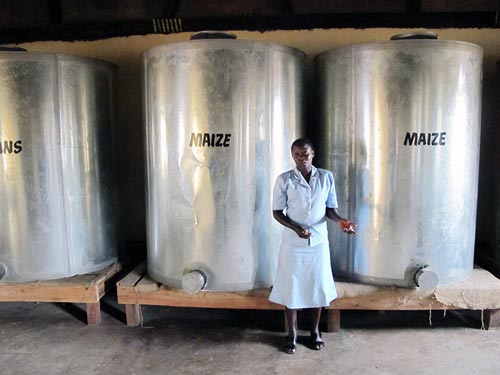 “When Richard Pamo, the then Caritas Development Coordinator [Homa Bay] introduced the metal silo technology to me in 2008, I felt I had received the solution to my perennial problems of storing my grains, particularly maize that was prone to weevil attack,” said Bishop Philip Anyolo of the Catholic Diocese of Homa Bay, Kenya, to a visiting team from the Effective Grain Storage for Sustainable Livelihoods of African Farmers Project (EGSP-II). “I instantly ordered two silos, of 1- and 1.8-ton capacity. And I have never been disappointed. I was so satisfied with the ability of the metal silos to protect my maize against weevils that I acquired another 720-kg capacity metal silo for my mother in 2009.”
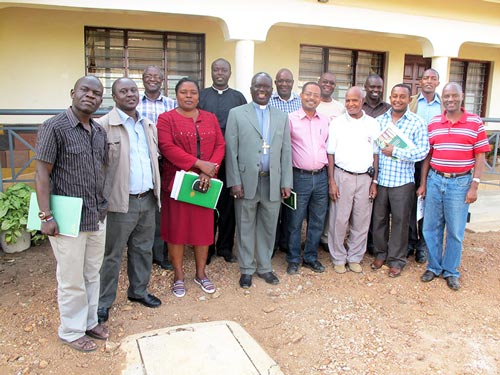 Impressed with the technology, the Bishop has advised all schools and institutions sponsored by the Catholic Church in Homa Bay to acquire metal silos for grain storage. His advice has since caught the attention of other institutions, including St. Vincent De Paul Boys Boarding School in Kisii County who acquired seven 2.7-ton metal silos in December 2011 after the Nyambururu Teachers College, Kisii County, bought ten 1.8-ton silos earlier in the year; the College had learned of the technology from the Kokwaro Secondary School in Homa Bay Diocese who had acquired eight 2.7-ton silos in 2010. Since the launch of EGSP-II in October 2012 in Kenya, Homa Bay farmers have acquired 230 metal silos, and institutions in the area, particularly boarding schools and colleges, have bought 47 more, according to Beautrice Otieno, Livelihoods Program Manager at Caritas Homa Bay and the site coordinator for western Kenya.
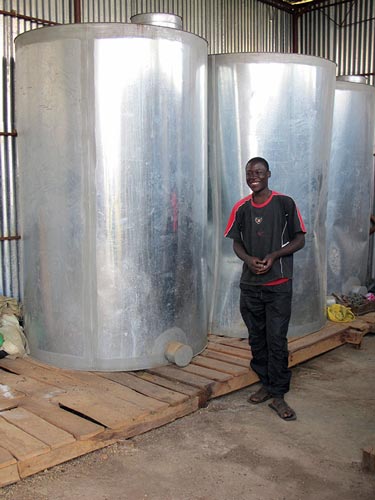 “Production is all in vain if farmers cannot store the harvested produce. Effective storage is even more critical at these times of climate change, where the associated weather vagaries adversely affect production. Whatever little that we produce should be well managed, and that includes being well stored for use at the desired time,” stressed Jennifer Ndege, Chief Officer, Agriculture, Livestock and Fisheries at Homa Bay County. Tadele Tefera, CIMMYT entomologist and EGSP-II coordinator, agrees: “A lot of agencies focus on increasing productivity but very few on the management of what has been harvested. Yet this is a very important aspect in any food security chain.” The information was collected during an assessment tour of Homa Bay and surrounding counties conducted by the EGSP-II Kenyan team during 15-19 July 2013; the team consisted of Tefera, Isaac Mutabai (CIMMYT), Wandera Ojanji (CIMMYT science writer/editor), Zachary Gitonga (CIMMYT Socioeconomics Program research associate), Addis Teshome (CIMMYT entomologist), Jackson K. Njana (Caritas-Embu), Everastus Okumu (Caritas-Homa Bay director), Otieno, Paddy Likhayo (Kenya Agricultural Research Institute, KARI), and Kimondo Mutambuki (KARI and EGSP-II Kenya national coordinator).
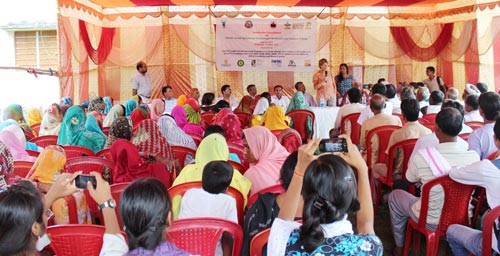 “Climatic extremes and variability are becoming more frequent and resulting in losses for farmers. This issue cannot be addressed in isolation; it needs collective participation of all stakeholders, at all levels,” stated Clare Stirling, leader of the CIMMYT component of the Climate Change, Agriculture and Food Security (CCAFS) CRP, at a stakeholder consultation on ‘Climate Smart Agricultural Technologies for Smallholder Farmers of Bihar’ held on 22 July 2013.
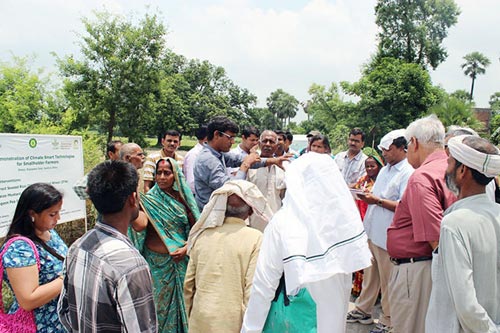 The lively discussions included almost 200 participants, including innovative CSV farmers from Bhatthadasi, Rajapakar, and Mukundpur (Vaishali district); agriculture advisors from various Village Panchayats; climate smart farmer groups, research students, and local service providers. M.L. Jat, CIMMYT-CCAFS South Asia Leader, explained the concept of CCAFS CSVs in South Asia, and the key climate smart activities they are implementing for the benefit of smallholder farmers in Bihar’s Vaishali district. Participants visited demonstration plots where R.K. Jat, CIMMYT-BISA Cropping Systems Agronomist, showed how mechanization and conservation agriculture-based management practices are being implemented even on small, fragmented land holdings. By effectively ‘pooling’ their land for operational purposes, farmers have improved efficiency, reduced costs, and established timely crop management even with uncertain rainfall. R.K. Jat also explained the main advantages of the key climate smart interventions such as zero tillage, Direct Seeded Rice (DSR), raised bed planting, residue management, crop diversification, and nutrient management in managing climate risks and optimizing resources for higher profitability for the smallholders.
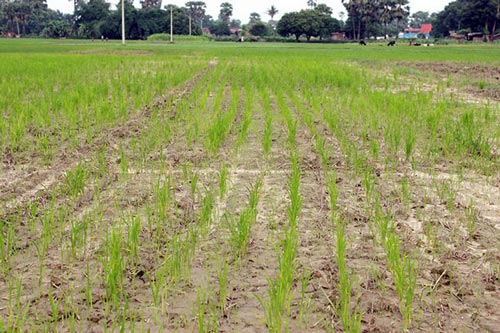 The active participation of about 80 female farmers allowed for a balanced and varied consultation. All the farmers expressed their concerns regarding climate variability and how it is affecting their livelihoods. They shared their experiences of turning their villages into CSVs, and how the new practices have benefitted them; after planting their wheat under zero till in the winter of 2012-13, farmers were initially skeptical of these changes to age-old practices, but having now reaped higher yields with less input costs, all the farmers have committed to planting under zero tillage next season. DSR has also been recently introduced, and the farmers thought the technology seemed promising in that it would reduce cultivation costs and provide some security under the increasing uncertainties of rainfall and labor shortages. The women farmers praised the intoduction of the ZT machine by CIMMYT under CCAFS. With many men migrating to cities, the women highlighted the reduced labor load with the increased availability of machinery and bed planting of maize and legumes.
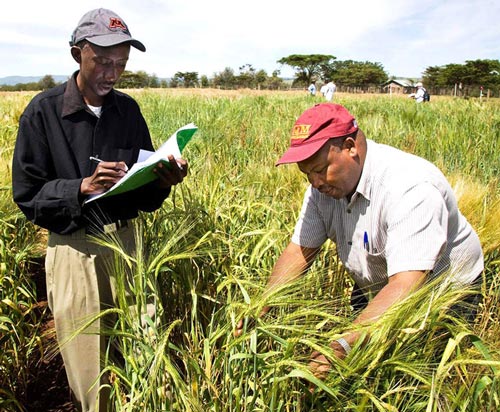 Wheat was not a traditional staple in much of Africa, but urbanization, a growing middle class, and changing lifestyles are driving a rapid increase in demand for it. The urban and rural poor in Africa eat wheat, as do more prosperous consumers, and demand is burgeoning with rising populations. But leading wheat producing countries in Africa grow enough to meet at most 40% of their demand, so the continent imports more than US$ 15 billion-worth of grain each year.
 The metal silo technology promoted by CIMMYT for maize storage has been hailed in Kenya as the ultimate solution to high maize postharvest losses caused by the maize weevil (Sitophilus zeamais) and large grain borer (Prostephanus truncatus), two major destructive insects of stored maize causing 30% losses and more than 80% damage to stored maize in Kenya and other countries in sub-Saharan Africa. The real losses are even bigger: when considering their environmental impact, the subsequent losses in nutritional value, industrial input, market opportunities, and the possible adverse effects on health of populations consuming poor-quality products, the need for interventions becomes even more apparent and pressing. “Addressing waste across the entire food chain must therefore be a critical pillar of future national food strategies,” said Ngari Nyaga, Crop Post Harvest Division head at the Kenyan
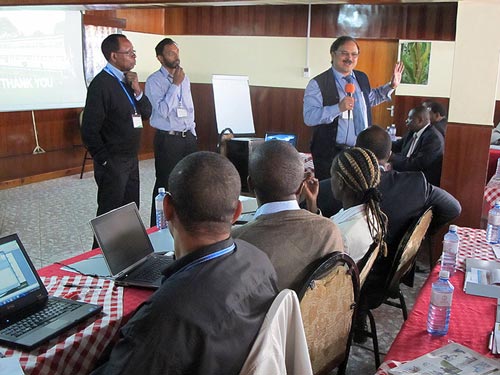
  Big news for public and private maize breeders and seed providers in Africa: you can now test your lines and hybrids under controlled stress conditions that allow you to tell how they’ll perform when grown by farmers. The latest results from regional maize stress screening trials and other important topics formed the agenda of the annual meeting of the Improved Maize for African Soils (IMAS) project, which during 10-12 July 2013 drew more than 70 participants to its Nairobi venue, including representatives from CIMMYT, which leads the project, key partners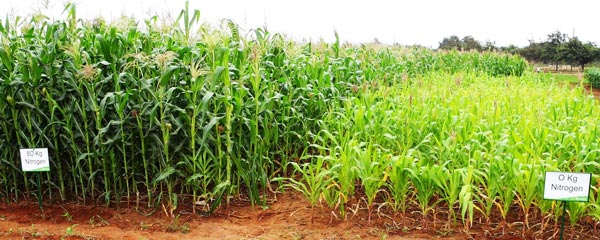
 “I can now identify with accuracy plants affected with maize lethal necrotic disease,” stated Regina Tende, PhD student attached to CIMMYT, after attending the CIMMYT-Kenya Agricultural Research Institute (
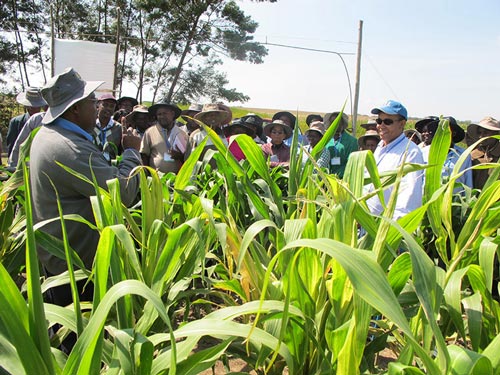 During his opening speech, Joseph Ng’etich, deputy director of Crop Protection, Ministry of Agriculture, noted that about 26,000 hectares of maize in Kenya were affected in 2012, resulting in an estimated loss of 56,730 tons, valued at approximately US$ 23.5 million. Seed producers also lost significant acreages of pre-basic seed in 2012: Agriseed lost 10 acres in Narok; Kenya Seed lost 75; and Monsanto 20 at Migtyo farm in Baringo, according to Dickson Ligeyo, KARI senior research officer and head of Maize Working Group in Kenya.
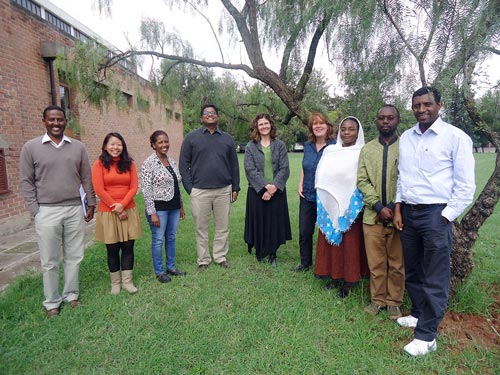 Exploring the potential for integrating gender at a range of scales in the work of the CIMMYT-
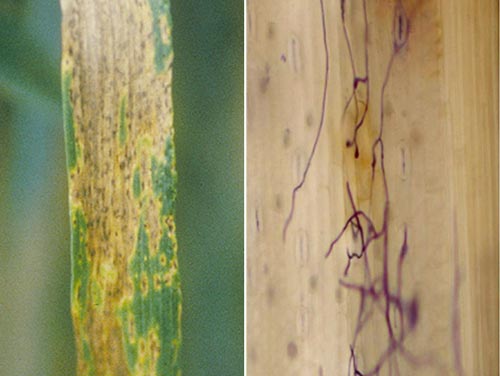 After screening some 500 wheat lines and varieties at 6 sites in Bangladesh, India, and Nepal, a group of scientists were able to identify 35 genotypes that resist spot blotch. This is the number-one disease of wheat in the Eastern Gangetic Plains, seriously damaging the crops of farmers—who are mostly smallholders—on some 9 million hectares.
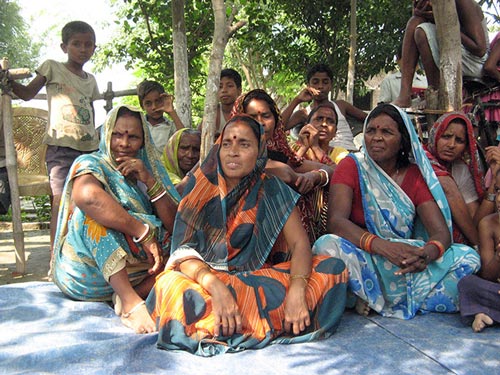 In June 2013, ML Jat (Global Conservation Agriculture Program) and research teams in Bihar and Haryana, India, welcomed CIMMYT gender specialist Tina Beuchelt and gender consultant Cathy Farnworth to discuss integration of gender perspectives into their daily research routine. The visit was triggered by the request from the CRP on Climate Change, Agriculture and Food Security (
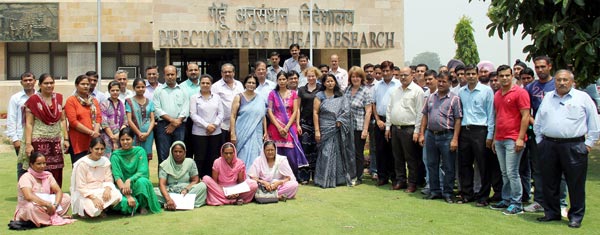 .
.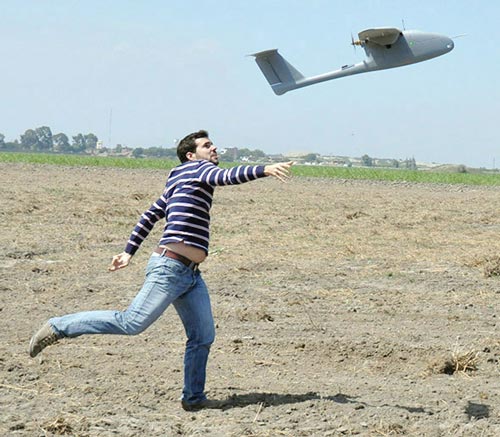 Training on the use of remote sensing from an unmanned aerial vehicle was given at INIAP-Peru’s Vista Florida experiment station on 1-5 June 2013. The course was organized by INIAP, the University of Barcelona, Spain, and CIMMYT’s regional office in Colombia. Remote sensing is used in precision agriculture and for phenotyping crops that are important for the region, such as maize, rice, and sugar cane.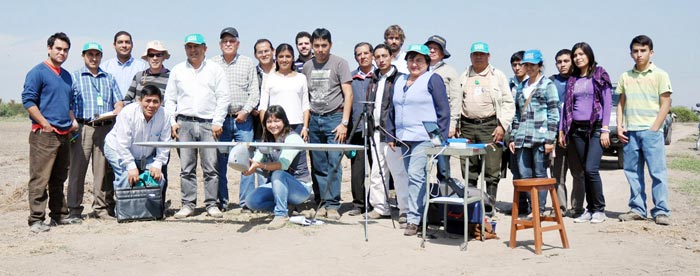
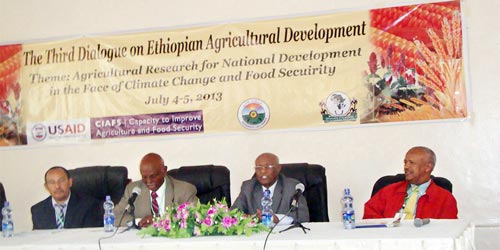 The third Dialogue on Ethiopian Agricultural Development: Agricultural Research for National Development in the Face of Climate Change and Food Security was held during 4-5 July 2013 at the Haramaya University of Agriculture, Haramaya Harar. The Dialogue aimed to provide a platform for discussion on agricultural research for development and transformation of the sector for food security in Ethiopia.
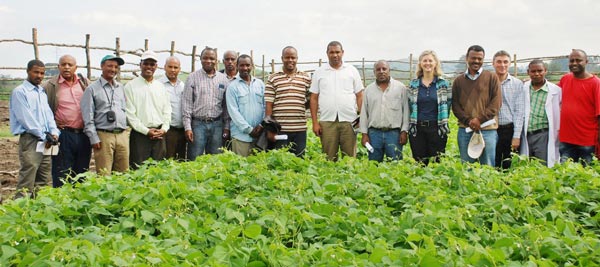 Myths and cultural practices can block farmers’ acceptance of a new technology, particularly the principles of reduced tillage, residue retention, and cropping rotations that underlie conservation agriculture. This was one observation in a recent visit to farmers in four districts in Ethiopia by Australian International Food Security Centre (